OUTSOURCE CREATIVE SERVICES - OUTSOURCE CREATIVE WORKS-OUTSOURCING CREATIVE WORK - OUTSOURCE CREATIVE DESIGN -OUTSOURCE 2D ARTWORKS - 2D ART SERVICES - 2D ART OUTSOURCING -ART OUTSOURCING - OUTSOURCE ILLUSTRATION WORKS - OUTSOURCE ILLUSTRATION SERVICES - OUTSOURCE 3D MODELING - 3D MODEL OUTSOURCING- OUTSOURCING CAD WORKS- OUTSOURCE ARCHITECTURAL SERVICES -BIM - REVIT - 3D FLOOR PLAN - BIM OUTSOURCING SERVICES - MEP - REVIT MODELING - 3D FURNITURE MODELING - 3D ARCHITECTURE MODELING - AUGMENTED REALITY MODEL - VIRTUAL REALITY MODEL - 3D RENDERING - PRODUCT MODELING - 2D SERVICES - OUTSOURCE CREATIVE SERVICES -3D MODELING SERVICES - VFX
Outsourced 3D Furniture Models for AR & VR
Reference: https://www.outsource3dmodeling.com/
The furniture and home goods industry is undergoing a profound visual revolution. Gone are the days when static 2D images or glossy print catalogs were sufficient to capture the imagination of a discerning buyer. Today’s consumer demands a tactile, realistic, and immediate digital experience. They want to see a sectional sofa in their living room, an office chair at their desk, or a dining table in their kitchen, not just on a screen.
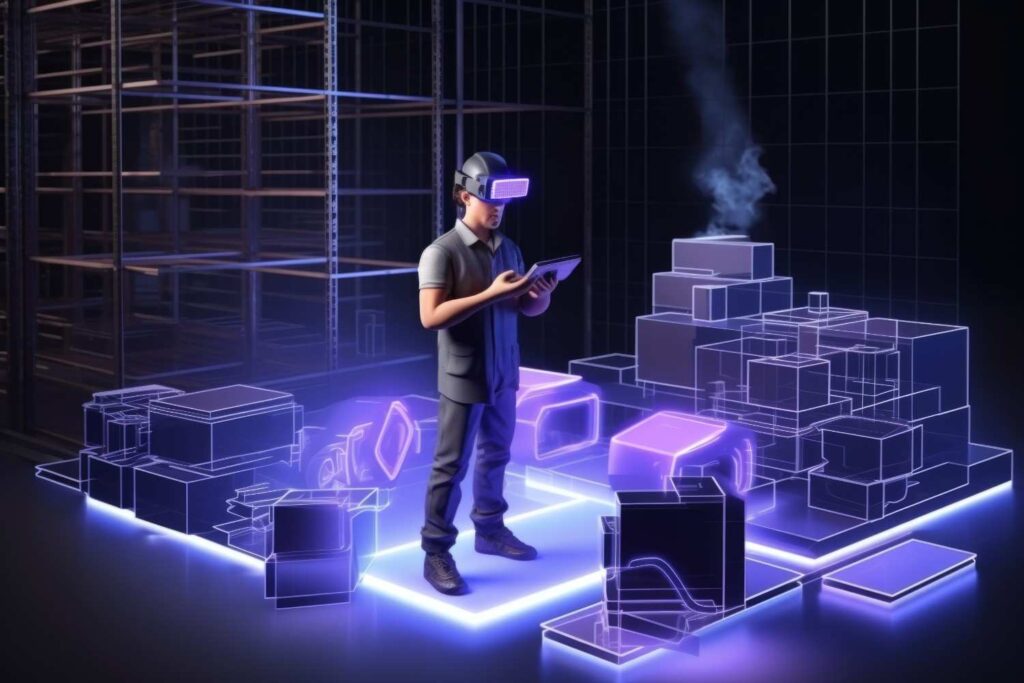
This demand has pushed Augmented Reality - Virtual Reality (AR/VR) from a novelty to a necessity, making it the bedrock of modern visual commerce. Immersive shopping experiences—where a customer can place a digital twin of a product in their physical space—have been shown to drastically reduce return rates (often by 20% or more) and significantly boost conversion rates.
However, the technical challenge lies in creating high-quality 3D Furniture Modeling assets that can perform flawlessly in real-time AR/VR environments across a multitude of mobile and headset devices. This is where the specialized expertise of an outsourced partner becomes non-negotiable.
The solution is not to invest millions in expanding an internal studio but to strategically Outsource 3D Modeling services. Partnering with specialists is the single most efficient way for brands to scale their product catalog, ensure technical compliance with platform standards (like ARKit and ARCore), and deliver the immersive experiences that secure customer trust.
This comprehensive guide details the technical workflows, strategic advantages, and critical quality standards involved in expertly outsourcing your 3d modeling and design assets for the immersive web.
1. The Critical Performance Challenge of AR/VR Furniture Models
Creating a stunning, photorealistic image for a static 3D Rendering is one technical challenge; creating a model for Augmented Reality - Virtual Reality is an entirely different discipline. The success of an AR furniture placement app is defined not just by visual beauty, but by performance and technical efficiency on a user's device.
The Technical Tightrope Walk: Realism vs. Performance
AR/VR-ready models must satisfy two often-conflicting requirements simultaneously:
- Photorealistic Visual Fidelity: The materials, textures, and geometry must be convincing enough to drive purchase confidence, making the digital twin indistinguishable from the physical product.
- Real-Time Performance: The model must load instantly and render smoothly at high frame rates (e.g., 60 FPS for AR, 90 FPS or higher for VR) without draining the device's battery or causing application crashes.
The Outsourcing Imperative for Optimization
The core value proposition of Outsource 3D Furniture Modeling lies in the partner's expertise in optimization techniques. An experienced outsourcing provider specializes in the technical triage required for every asset, balancing visual detail with polygon efficiency:
- Polygon Reduction (Retopology): This is the most crucial step. Specialists meticulously reduce the geometric complexity of the model (poly count) from high-detail source CAD files to the optimal low-poly count required for AR (typically between 10k–50k polygons). This is a precise, manual skill essential for maintaining performance.
- Levels of Detail (LODs): To manage scenes with multiple objects, the outsourced team implements LODs—creating multiple versions of the same model (e.g., high, medium, and low detail). The AR/VR application dynamically switches between these versions based on the user's distance from the object, ensuring the model looks great up close but remains efficient when viewed from across the room.
- Draw Call Reduction: The team optimizes the model's material and mesh structure to minimize the number of instructions the device's GPU must execute. This is achieved through techniques like Texture atlasing (combining multiple textures into one sheet), which ensures faster loading and smoother interactivity.
By offloading this complex, technical 3d modeling and design work, businesses ensure their AR/VR launch is a success, not a performance failure.
2. Mastering Photorealism through PBR Texturing and Material Science
Realism in immersive commerce hinges on materials, a discipline known as Texturing and shader work. A virtual leather sofa that looks flat, plastic, or glossy fails to inspire confidence and breaks the illusion of reality.
The PBR Standard: Cross-Platform Consistency
Specialized Outsource 3D Modeling services providers utilize Physically Based Rendering (PBR) workflows exclusively for AR/VR furniture. PBR is a standardized methodology that uses real-world physics to simulate how light interacts with surfaces. This ensures that the digital material (like a wood grain or metal finish) reacts to light consistently, regardless of the user's environment or device.
- Accurate Material Recreation: Outsourcing specialists meticulously study material swatches, high-resolution photographs, or CAD material specifications to recreate the exact physical properties (e.g., roughness, metallic, normal, albedo) of the material. They ensure the roughness map of a velvet chair accurately simulates light scattering, while the metallic map of a chrome accent is perfectly reflective.
- Expert UV Mapping: Proper UV mapping is foundational. It ensures that textures align perfectly on complex geometries, eliminating seams and stretching. The outsourced team guarantees clean, professional UV layouts, often baking the high-detail geometry into Normal Maps to preserve the look of fine details on the optimized low-poly model.
This hyper-focus on material fidelity and real-world lighting simulation by the specialized team ensures that the final 3D Product Design model is not just a digital shape, but an accurate, photorealistic representation that instills purchase confidence.
3. The Professional 3D Furniture Modeling Workflow: From CAD to AR/VR Ready
A professional outsourcing partnership follows a highly structured, repeatable workflow that guarantees quality, compliance, and speed—transforming a product concept into a market-ready AR/VR asset.
Phase 1: Ingestion and Concept Preparation
The process begins with the client supplying source material—typically detailed CAD files, engineering drawings, material swatches, and high-resolution photographs of the physical furniture. A clear project brief is established, defining target polygon counts and platform formats.
Phase 2: High-Fidelity Master 3d modeling and design
The outsourced team creates the master high-poly model, which will serve as the "single source of truth" for all future visualizations, including marketing 3D Rendering and the optimized AR/VR assets. This ensures consistency across all media.
Phase 3: PBR Texturing and Material Application
Materials are created and applied using the PBR standard. If the product has multiple configurations (e.g., three wood stains, five fabric colors), the team creates all texture variations, ready to be dynamically swapped by the AR application's configurator.
Phase 4: AR/VR Optimization (The Core Value)
This is the phase that validates the choice to Outsource 3D Furniture Modeling:
- Retopology and Baking: The high-poly master is retopologized to a device-friendly, low-poly count. The fine details are then "baked" from the high-poly mesh onto the low-poly mesh's normal map.
- LOD Generation: Multiple LODs are created for optimal performance.
- Platform Compliance: Meshes are cleaned, duplicate parts are instanced, and the hierarchy (outliner) is organized for seamless integration into game engines like Unity and Unreal.
Phase 5: Platform-Specific Export and QA
The final, optimized model is delivered in the specific file formats required for AR/VR deployment (e.g., USDZ for Apple ARKit/iOS, GLTF/GLB for Google ARCore/Android and WebAR). The model is thoroughly tested on target devices to verify scale, lighting reaction, and placement accuracy, providing a final layer of quality assurance.
4. Scalability: The Necessity for 3D Product Design Catalogs
The modern furniture market demands continuous asset creation. New lines, seasonal fabrics, and highly configurable products mean a brand’s digital asset needs are constant and massive.
The Power of Elastic Scalability
Outsource 3D Modeling services provide elastic scalability that an internal team simply cannot match. If a company suddenly launches 50 new SKUs requiring AR assets, an internal team faces a paralyzing backlog. An outsourced partner, with hundreds of dedicated 3D artists, can immediately allocate a large, experienced team, turning a massive production challenge into a predictable, short-term project delivered on schedule.
Efficiency and Strategic Focus
Outsourcing converts the high fixed costs of an in-house studio (salaries, expensive software licenses for high-end 3D Rendering and modeling, and powerful computing hardware) into predictable, variable project costs. This efficiency allows the internal team to focus on core design innovation, brand strategy, and complex 3D Architecture visualization, rather than the high-volume, repetitive tasks of optimization and model production.
5. Strategic Applications Across Visual Commerce and 3D Architecture

The high-quality models created by Outsource 3D Furniture Modeling are not single-use assets; they are foundational to a holistic visual commerce strategy that extends far beyond a simple product viewer.
- AR 'Try-Before-You-Buy': The most immediate and high-ROI application, where customers place the furniture in their physical space at real-world scale, which directly impacts purchase confidence.
- Virtual Showrooms (VR): Customers can navigate a photorealistic, curated 3D Architecture environment—a fully branded virtual store—and interact with products using a VR headset, offering a true sense of presence and scale.
- B2B Sales and Configurator Tools: Sales teams use these dynamic 3D Product Design models in configurator tools to show different fabrics, finishes, and configurations in real-time to B2B clients and interior designers, significantly accelerating the sales cycle for custom pieces.
- Seamless 3D Rendering for Marketing: The master high-poly model serves as the source for all traditional marketing visuals, ensuring every asset—from a high-resolution print ad to a detailed web spinner—is perfectly consistent with the AR/VR experience.
6. The Future is Interoperable: Integrating Furniture with 3D Architecture
Furniture brands often rely on and sell to interior designers and architects. The high-quality, scale-accurate assets generated through specialized outsourcing are perfectly suited for integration into larger 3D Architecture visualization projects.
A specialist outsourcing team can deliver assets that are correctly scaled and compatible with popular architectural visualization software (like 3ds Max, Revit, Unreal Engine, and Blender). This allows architects and interior designers to quickly populate their virtual 3D Architecture spaces with branded, accurate furniture models, enhancing the realism of their own client presentations and design proposals. This interoperability makes the outsourced model a long-term, valuable asset for B2B collaboration and channel sales.
Conclusion: AR/VR is the Future of Furniture Commerce
The shift to Augmented Reality - Virtual Reality is permanent, and for the furniture industry, it is a direct line to improved profitability, reduced returns, and a superior customer experience. However, the path to successful deployment is paved with complex technical requirements that mandate specialization in optimization and PBR workflows.
By strategically choosing to Outsource 3D Modeling services for your 3D Furniture Modeling, businesses gain immediate access to the necessary technical expertise, quality control, and massive production scalability. This strategic partnership transforms the complexity of creating AR/VR-ready 3D Product Design assets into a streamlined, high-speed workflow, ensuring your visual commerce strategy is not only competitive but a defining competitive advantage in the digital marketplace.
Outsource 3D Modeling services provide this essential technical backbone, allowing companies to overcome the dual challenge of high technical barriers and massive catalog volume. By partnering with experts, firms can ensure their products look perfect in a user's home, reducing doubt, increasing sales, and firmly establishing themselves as leaders in the digital commerce space.
To turn your product catalog into an immersive AR/VR experience with guaranteed technical quality, visit https://www.outsource3dmodeling.com/ and explore dedicated 3D Product Design outsourcing.
Frequently Asked Questions (FAQs)
1. What is the biggest challenge in creating a 3D Furniture Modeling for AR/VR?
The biggest challenge is balancing photorealism (high detail, complex Texturing) with real-time performance (low polygon count, efficient textures). An expert model must look stunning while being lightweight enough to run smoothly on a standard mobile device in an Augmented Reality - Virtual Reality application.
2. Why can’t I use my high-resolution 3D Rendering models for AR/VR?
High-resolution models are typically high-poly and too complex for real-time mobile processing. AR/VR requires the model to undergo low-poly retopology and texture optimization, which is a specialized process handled by Outsource 3D Modeling services to create a lightweight, high-performance asset.
3. What file formats should I request for AR/VR furniture models?
The industry standard formats are USDZ (for Apple's ARKit/iOS) and GLB/GLTF (for Android and WebAR). Expert Outsource 3D Modeling services should be able to deliver optimized assets in both formats, ensuring maximum platform compatibility.
4. How does outsourcing help with Texturing for AR/VR?
Outsourcing partners use the PBR (Physically Based Rendering) workflow and provide high-quality texture maps (like Normal, Roughness, Metallic) that accurately simulate how light interacts with the material. This ensures the furniture looks realistic and consistent when viewed in various real-world lighting conditions via AR.
5. How does Outsource 3D Furniture Modeling reduce product returns?
Models created by expert Outsource 3D Modeling services are dimensionally accurate (real-world scale). When a customer uses an AR app to place a model in their room, they eliminate guesswork about size and fit, leading to higher confidence in the purchase and a significant reduction in returns.
6. Does the outsourcing team handle 3D Architecture integration too?
Yes. Expert providers ensure the furniture models are clean, dimensionally accurate, and compatible with professional 3D Architecture and interior design software (like Revit or SketchUp), making them valuable assets for B2B channels as well as direct-to-consumer sales.
Outsource 3D Modelling Services


No comments:
Post a Comment