Tuesday, 7 July 2026

Why Global Companies Outsource 3D Modeling Services to Scale Faster

 Why Global Companies Outsource 3D Modeling Services to Scale Faster

Published by C-Design  | outsource3dmodeling.com


In the hyper-competitive landscape of modern commerce, speed and visual impact are no longer just advantages—they are prerequisites for survival. As businesses across the United States, United Kingdom, Germany, France, Australia, and New Zealand strive to capture consumer attention, the demand for high-quality, immersive visual content has skyrocketed. From photorealistic furniture catalogs to interactive virtual reality environments, 3D modeling has become the engine driving global brand growth. However, building an in-house team capable of handling the complexities of 3d modeling and design is often a bottleneck for scaling. This is why forward-thinking global companies are turning to Outsource 3D Modeling services to bridge the gap between vision and execution.

The Strategic Shift: Why Scaling Demands 3D Precision

The digital transformation of the last decade has fundamentally altered how products are designed, marketed, and sold. Whether it is a developer showcasing a new residential project through 3D Architecture or a manufacturer launching a new line of consumer electronics, the need for precision is absolute. Traditional 2D representations are no longer sufficient to meet the expectations of a global audience that demands interactivity and photorealism.

The Evolution of Visual Communication

We have transitioned from a world of static images to one of dynamic, interactive experiences. In the early days of the internet, a simple photograph was enough to sell a product. Today, consumers want to zoom in on the texture of a fabric, see how light reflects off a polished surface, and even "place" a piece of furniture in their living room using their smartphone. This shift is not just about aesthetics; it is about building trust. A high-quality 3D model provides a level of transparency that a 2D image cannot match. It says to the customer, "What you see is exactly what you will get." This psychological assurance is the foundation of modern e-commerce and high-ticket sales in industries like real estate and luxury goods.

The Scaling Bottleneck

For many companies, the internal resources required to manage 3D Rendering, Texturing, and complex modeling workflows are prohibitive. Scaling a business requires a rapid increase in content production without a proportional increase in overhead. If a company decides to launch 100 new products in a quarter, an in-house team of two or three designers will quickly become overwhelmed. This leads to delays, compromised quality, and missed market opportunities.

Furthermore, the management of a 3D department requires specialized knowledge. HR departments often struggle to vet 3D artists, and project managers may not understand the technical nuances of render times or topology. Outsourcing provides a flexible, on-demand solution that allows companies to focus on their core competencies—innovation and sales—while experts handle the technical heavy lifting. It removes the management burden and replaces it with a streamlined, results-oriented partnership.

The Core Advantages of Outsource 3D Modeling Services

1. Drastic Reduction in Operational Costs

One of the most immediate benefits of choosing to Outsource 3D Modeling services is the cost advantage. Maintaining an in-house 3D department involves significant investment in high-end hardware (workstations with powerful GPUs), expensive software licenses (such as 3ds Max, Maya, or ZBrush), and the continuous training of staff to keep up with evolving technologies.

Beyond the equipment, the "hidden" costs of employment—benefits, office space, recruitment fees, and management time—add up quickly. In regions like the US or the UK, the salary of a senior 3D artist can be substantial. By outsourcing to a specialized partner like C-Design, companies can convert these fixed costs into variable expenses. You pay for what you need, when you need it. This financial agility is crucial for startups and established enterprises alike, especially when navigating the economic complexities of global markets. It allows for better capital allocation toward marketing and R&D.

2. Access to a Global Talent Pool

The expertise required for high-end 3D Product Design or intricate Texturing is highly specialized. A designer who is an expert in organic modeling for characters might not be the best fit for hard-surface modeling for industrial machinery. When you outsource, you are not limited by local talent availability or the specific skill set of your few in-house hires.

You gain access to a diverse team of professionals who have spent decades perfecting their craft. These experts understand the nuances of lighting, material properties, and geometric optimization. They stay updated on the latest industry trends, such as AI-assisted texturing or real-time rendering engines like Unreal Engine 5. This ensures that every model is not just a digital asset but a work of art that meets international standards. This "brain trust" becomes an extension of your own team, bringing a wealth of experience from hundreds of different projects across various industries.

3. Accelerated Time-to-Market

In industries like fashion, furniture, and technology, being first to market is critical. The "window of opportunity" is often narrow. Outsource 3D Modeling services often operate across multiple time zones, enabling a "follow-the-sun" workflow. While your local team in New York or London finishes their day, your outsourcing partner in another part of the world is just starting.

This round-the-clock productivity significantly shortens project timelines. What might take an in-house team three weeks to complete can often be delivered in one week by a dedicated outsourcing partner. This speed allows for faster product launches, more agile marketing campaigns, and the ability to respond instantly to competitor moves. In the digital age, speed is often the difference between winning a market and being an also-ran.

4. Scalability and Flexibility on Demand

Business cycles are rarely linear. A company might have a massive requirement for 500 models during a seasonal product launch and only 10 models during a quiet period. An in-house team is difficult to scale up or down quickly. Hiring new staff takes months, and letting people go is costly and damaging to morale.

Outsourcing partners provide the elasticity needed to handle large-scale projects at a moment's notice. Whether you need a single prototype or a massive library of 1,000 SKUs, a partner like C-Design can allocate the necessary resources to meet your deadline. This flexibility is a key driver for global companies looking to remain lean while growing fast. It allows you to say "yes" to big opportunities without worrying about whether your team can handle the workload.

Deep Dive: Outsource 3D Furniture Modeling

The furniture industry has been one of the biggest beneficiaries of the 3D revolution. Traditional furniture photography is notoriously expensive and logistically challenging. Shipping large items to a studio, setting up elaborate environments, and hiring photographers can cost thousands of dollars per item. If a sofa comes in 20 different fabric options, photographing every single one is practically impossible.

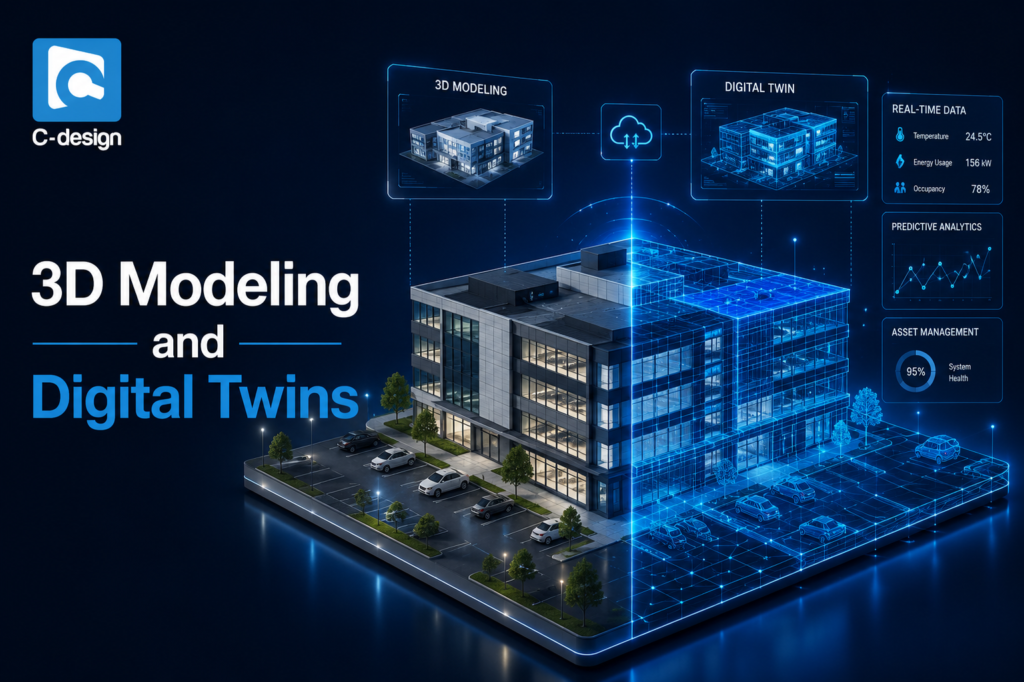
By choosing to Outsource 3D Furniture Modeling, brands can create hyper-realistic digital twins of their entire catalog. These models can be placed in any virtual environment—from a modern loft in New York to a cozy cottage in the French countryside—without ever leaving the computer.

The Power of Photorealism in Furniture

Modern 3D Rendering and Texturing techniques have reached a point where digital models are indistinguishable from real photos. This allows furniture retailers to:

Test new designs: Before committing to manufacturing, companies can showcase 3D models to focus groups or on social media to gauge interest. This "market validation" saves millions in failed product launches.

360-Degree Views: Customers can rotate the product, seeing every angle, which significantly reduces the "uncertainty" that leads to abandoned carts.

Interactive Configurators: Users can change fabrics, wood finishes, and hardware in real-time. This interactive experience keeps users on the site longer and increases conversion rates.

This level of detail is essential for attracting high-quality leads in competitive markets like Germany and Australia, where consumers value both aesthetics and technical precision. For a furniture manufacturer, the ROI on a 3D model is often realized after just a few sales, as it replaces the need for multiple photo shoots and physical samples. Furthermore, these models can be reused across print catalogs, social media, and television commercials, providing a consistent brand image.

The Frontier of Innovation: Augmented Reality - Virtual Reality

As we move further into the 2020s, the integration of Augmented Reality - Virtual Reality (AR/VR) is no longer a futuristic concept—it is a current marketing standard. Global companies are using AR to allow customers to "place" products in their homes via smartphone apps. VR is being used for immersive architectural walkthroughs, medical training, and industrial simulations.

The Technical Challenge of AR/VR

Creating assets for Augmented Reality - Virtual Reality requires a specific set of skills that differ from traditional rendering. Models must be optimized for real-time performance. A model used for a high-end print ad might have millions of polygons, but that same model would crash a smartphone app.

Outsourcing partners specialize in:

Retopology: Converting high-poly "sculpts" into efficient low-poly models.

PBR (Physically Based Rendering) Texturing: Ensuring that materials look realistic under any lighting condition in an AR environment.

Baking: Transferring high-detail lighting and texture information onto simpler geometry to maintain visual quality while improving performance.

Interactivity: Setting up models so they can be interacted with—doors opening, lights turning on, or materials changing at a touch.

By outsourcing these specialized workflows, companies can stay at the cutting edge of technology without needing to master the technical intricacies of AR/VR development internally. This is particularly important for brands in the US and UK that are competing in the "spatial computing" era.

Precision in 3D Architecture and 3D Product Design

In the world of real estate and industrial manufacturing, the stakes are high. 3D Architecture allows developers to sell a vision before the first brick is laid. It provides a tool for stakeholder approval, government compliance, and pre-sales marketing. Similarly, 3D Product Design enables engineers and marketers to visualize complex machinery or consumer electronics with absolute clarity.


3D Architecture: Visualizing the Future

For architects and property developers in Australia and New Zealand, 3D visualization is a critical part of the planning process. It allows them to:

•Analyze Light and Shadow: See how a building will interact with its environment at different times of the day, ensuring compliance with local regulations.

•Material Selection: Experiment with different facades, flooring, and interior finishes to find the most cost-effective and aesthetically pleasing combination.

•Virtual Walkthroughs: Give potential buyers a tour of an apartment that hasn't been built yet, securing pre-sales that fund the construction.

3D Product Design: From Concept to Reality

In manufacturing hubs like Germany and the US, 3D Product Design is used to bridge the gap between engineering and marketing. A 3D model can be used for:

•Prototyping: Identifying design flaws or ergonomic issues before physical production begins.

•Exploded Views: Showing the internal components of a complex machine for educational, repair, or marketing purposes.

•Global Consistency: Ensuring that a product looks the same in marketing materials across all regions, regardless of where the local marketing team is based.

The workflow for these services involves a meticulous process of conceptualization, modeling, texturing, and rendering. Outsourcing these tasks to a dedicated team ensures that the final output is of the highest professional standard, suitable for presentation to high-level investors and international clients.

The Workflow of a Professional 3D Project

Understanding the steps involved in a professional 3D project helps illustrate why specialized outsourcing is so valuable. It is not just about "drawing" on a computer; it is a complex engineering and artistic process.

Step 1: Conceptualization and Reference Gathering

The project begins with a deep dive into the client's requirements. This involves studying CAD drawings, blueprints, or even hand-drawn sketches. For 3D Furniture Modeling, it might involve analyzing physical samples of wood and fabric to ensure the digital version is an exact match.

Step 2: 3D Modeling (Geometry)

The "skeleton" of the object is created. This involves defining the shape using polygons. For 3D Architecture, this means building the walls, floors, and structural elements with mathematical precision. For 3D Product Design, it means capturing every curve and bevel of a physical product.

Step 3: Texturing and Shading

This is where the object gets its "skin." Artists apply digital materials that define how the surface looks and feels. Is it shiny? Is it rough? Does it have a grain? This step is critical for photorealism. Texturing involves complex maps—diffuse, normal, specular, and displacement—that work together to trick the eye into seeing depth and detail where there is only a flat surface.

Step 4: Lighting and Environment Setup

Just like a real-world photo shoot, a 3D scene needs light. Artists set up virtual lights—sunlight, spotlights, or ambient glow—to create the desired mood. They also build the environment, whether it is a minimalist studio or a lush outdoor garden.

Step 5: 3D Rendering

The computer takes all the data and calculates the final image. This can take anywhere from a few minutes to several days, depending on the complexity of the scene. Professional outsourcing partners like C-Design use "render farms"—clusters of powerful computers—to speed up this process.

Step 6: Post-Processing and Quality Control

The final images are refined in software like Adobe Photoshop to adjust colors, contrast, and sharpness. Every deliverable goes through a rigorous quality check to ensure it meets the client's standards before being sent.

Why C-Design (Outsource 3D Modeling Services) is the Top Choice

When it comes to selecting a partner for your 3D needs, experience and reliability are paramount. C-Design has established itself as a global leader in the field, offering a comprehensive suite of services under the Outsource 3D Modeling Services banner.


A Legacy of Excellence

Since its inception in 2005, C-Design has been at the forefront of the 3D revolution. Over the last 20 years, they have delivered more than 500 projects to over 140 satisfied clients worldwide. This track record is a testament to their ability to adapt to changing technologies and client needs. They have seen the industry evolve from basic wireframes to the immersive AR/VR experiences of today.

A Team of Experts

With a dedicated team of over 200 professionals, C-Design possesses the depth and breadth of expertise required to handle any project. Their team includes:

•Specialized Modelers: Experts in furniture, characters, vehicles, and architecture.

•Texture Artists: Professionals who can recreate any material, from aged leather to brushed titanium.

•Lighting and Rendering Specialists: Experts who bring scenes to life with photorealistic lighting.

•AR/VR Developers: Technicians who ensure your models are ready for the next generation of interactive platforms.

Industry-Specific Solutions

C-Design doesn't just provide models; they provide tailored solutions for various industries:

•Furniture Manufacturing: Helping brands digitize catalogs and implement AR.

•Real Estate & Architecture: Providing high-end visualizations and walkthroughs.

•Industrial Manufacturing: Visualizing complex products and machinery.

•Healthcare: Creating 3D models for medical devices and educational simulations.

•Gaming & Entertainment: Delivering high-quality assets for virtual worlds.

Global Standards and Seamless Communication

C-Design understands the specific requirements of clients in the US, UK, Europe, and Oceania. They align their workflows with international standards, ensuring that communication is seamless and deliverables are always on time. They use project management tools that allow clients to track progress in real-time, providing transparency and peace of mind. Their commitment to quality and innovation makes them the preferred choice for companies looking to scale their visual content production.

The Strategic Impact on Global Markets

The decision to Outsource 3D Modeling services has different strategic implications depending on the region:

United States & Canada: In the fast-paced North American market, the focus is often on speed and AR integration. Companies use 3D to dominate e-commerce platforms like Amazon and Wayfair, where visual quality is the primary differentiator.

United Kingdom & Ireland: The UK market places a high value on architectural heritage and modern design. 3D visualization is key for planning permissions, high-end retail, and luxury branding.

Germany & France: These markets are known for their engineering excellence and attention to detail. 3D Product Design and technical accuracy are the primary drivers here.

Australia & New Zealand: With a booming real estate sector and a tech-savvy population, 3D Architecture and interior visualization are in high demand to reach remote buyers and international investors.

By partnering with a global provider like C-Design, companies in these regions can leverage world-class talent while maintaining their local market focus. It allows a small firm in Sydney to compete with a global giant in London by having the same level of visual sophistication.

Future Trends: The Road Ahead for 3D Outsourcing

As we look toward the future, several trends are set to make outsourcing even more essential for global companies:

AI Integration

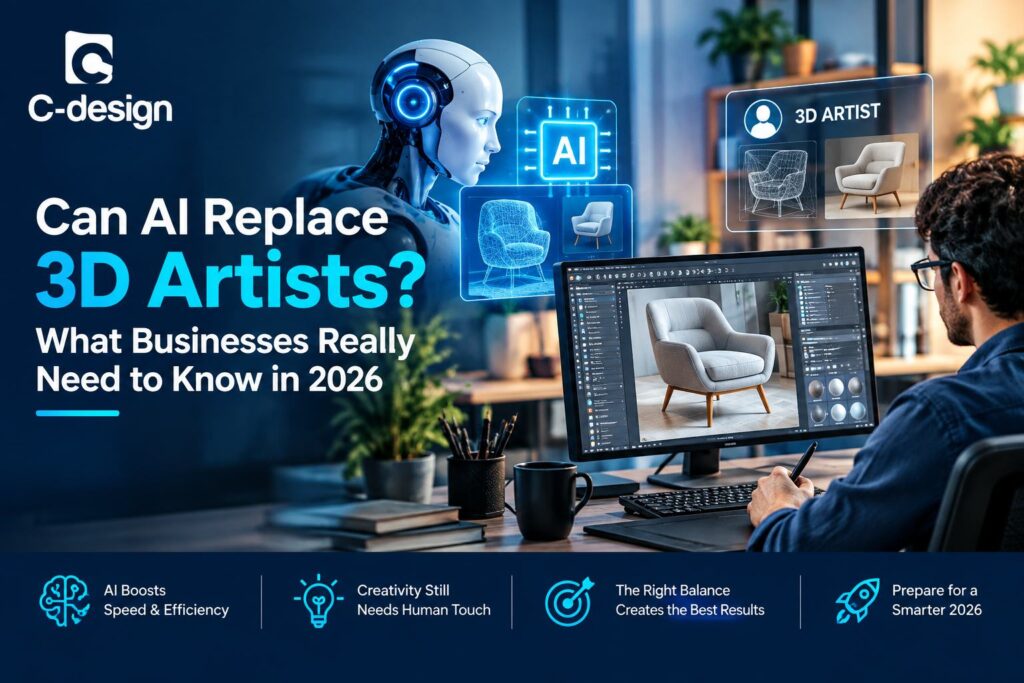
Artificial Intelligence is not replacing 3D artists; it is empowering them. AI tools are being used to speed up repetitive tasks like UV unwrapping and texture generation. Outsourcing partners who embrace these tools can deliver projects even faster and at a lower cost.

The Rise of the Metaverse

As virtual worlds become more prevalent, the demand for 3D assets will explode. Companies will need digital versions of their products for virtual showrooms, social spaces, and games. This "mass digitization" can only be achieved through large-scale outsourcing.

Real-Time Everything

The shift from pre-rendered images to real-time interactive assets is accelerating. Clients want to be able to "walk through" a building or "operate" a machine in a virtual space. This requires a high level of technical optimization that only specialized outsourcing teams can provide.

Conclusion: The Path to Scalable Growth

In an era where visual content is the primary driver of consumer engagement, the ability to produce high-quality 3D assets at scale is a competitive necessity. The traditional model of relying solely on in-house talent is no longer sustainable for companies that want to lead their industries.

By choosing to Outsource 3D Modeling services, global companies can unlock unprecedented levels of efficiency, creativity, and speed. They can reduce costs, access specialized expertise, and stay at the cutting edge of technological innovations like Augmented Reality - Virtual Reality.

Whether you are looking to digitize a furniture catalog through Outsource 3D Furniture Modeling, create immersive interactive experiences, or showcase your next architectural masterpiece, the right outsourcing partner can make all the difference.

C-Design stands ready to be that partner. With their deep industry knowledge, scalable resources, and commitment to excellence, they can help you transform your vision into reality and scale your business faster than ever before. Don't let your internal capacity limit your global ambitions.

CTA: “Connect with our Expert Team”

Frequently Asked Questions (FAQs)


1. What are the primary benefits of outsourcing 3D modeling services?

Outsourcing offers significant cost savings by eliminating the need for expensive hardware and software. It provides access to a global pool of specialized talent, ensures faster turnaround times through round-the-clock workflows, and allows businesses to scale their production up or down instantly based on project demands. It also removes the management burden of running a technical department.

2. How does 3D furniture modeling help e-commerce businesses?

It allows brands to create photorealistic digital twins of their products, eliminating the need for expensive physical photography and shipping. These models can be used in 360-degree viewers, AR apps, and interactive catalogs, which has been shown to increase conversion rates, improve customer trust, and significantly reduce product returns.

3. What is the difference between 3D Rendering and Texturing?

Texturing is the artistic process of applying digital "skins" or materials to a 3D model to define its visual properties like color, roughness, and reflectivity. Rendering is the technical step where the computer processes the 3D data—including geometry, textures, and lighting—to produce the final high-quality 2D image or animation. Think of texturing as painting a car and rendering as taking a professional photo of it.

4. Why is AR/VR important for modern product marketing?

AR/VR provides an immersive "try-before-you-buy" experience. Customers can visualize how a product fits in their own space or explore a virtual environment. This level of interaction builds deep consumer confidence, reduces the sales cycle, and sets brands apart in a crowded digital marketplace by offering a unique, interactive experience.

5. How does C-Design ensure the quality of its 3D modeling services?

C-Design leverages over 20 years of experience and a team of 200+ professionals. They follow a rigorous multi-stage quality control process, use the latest industry-standard software, and maintain constant communication with clients. Every project is reviewed by senior artists to ensure it meets exact specifications and global quality standards for photorealism and technical accuracy.

6. Can C-Design handle large-scale architectural and product design projects?

Absolutely. With a portfolio of over 500 delivered projects, C-Design is equipped to manage complex 3D Architecture and 3D Product Design workflows. They serve a wide range of industries including real estate, manufacturing, healthcare, and gaming, providing scalable resources for projects of any size, from single models to entire virtual cities.

Tags

#Outsource3DModeling #3DFurnitureModeling #3DRendering #Texturing #ARVR #3DArchitecture #ProductDesign #CDesign #ScaleFaster #GlobalBusiness #3DDesignServices #VisualContentMarketing #DigitalTransformation #AugmentedReality #VirtualReality #EcommerceSuccess #ManufacturingInnovation #RealEstateMarketing #TechTrends2024 #GlobalOutsourcing #3DVisualization #DigitalTwin

Tuesday, 23 June 2026

How Real-Time 3D Configuration Is Redefining Furniture Retail

Interactive 3D Furniture Configurator

Published by C-Design  | outsource3dmodeling.com


Imagine a furniture showroom that exists entirely inside your browser. Every sofa is available in every fabric, every dining table can extend or collapse in seconds, and every wood finish shifts from pale ash to deep walnut at a single click. This is not a distant retail dream — it is what C-Design's Interactive 3D Furniture Configurator delivers to brands and shoppers today.


For decades, furniture e-commerce lived and died by static photography. Brands invested heavily in physical prototypes, styled shoots, and catalog cycles that stretched across months. Shoppers were left squinting at thumbnail images, trying to imagine how a sectional would look in sage green instead of the displayed charcoal. The result was a persistent confidence gap that translated directly into abandoned carts and costly returns.

C-Design was built to close that gap. Since 2005, operating under the Outsource 3D Modeling banner, the studio's proprietary pipeline converts a single master 3D asset into an unlimited library of photoreal, interactive product variants — all rendered live in the browser, without plugins and without compromise on visual fidelity.

The Problem with Static Catalogs

A mid-range sofa offered in ten fabrics, three leg finishes, and two configurations represents sixty distinct SKU combinations. Photographing every variant with studio-quality lighting can cost tens of thousands of dollars per product line — before re-shoots when materials change or new colorways emerge. Physical samples take weeks to produce, and by the time a catalog is live, suppliers have already updated fabric collections.

Beyond cost, there is the deeper problem of emotional distance. A flat photograph cannot let a shopper feel scale, explore texture, or visualize a piece inside their own home. That inability to truly connect with a product is the root cause of furniture's historically high return rates — and the core problem that 3D configuration solves.

What the Configurator Does

C-Design's configurator renders a photorealistic 3D product model Interactive 3D Furniture Configurator3D Furniture Modelingdynamically — recalculating lighting, shadow, reflection, and material appearance in real time as the user makes selections. Six core capabilities drive the experience:

• Fabric and finish swapping — switch materials instantly, with accurate texture tiling and sheen

• Material tint and reflection control — adjust hue and specular intensity from matte to high-gloss

• Functional animations — open drawers, extend tables, unfold sofa beds to verify real-world usability

• Multi-state products — toggle between compact, standard, and extended configurations

• 360-degree orbit — examine every angle, from floor-level detail to overhead perspective

All of this runs natively in the browser, on desktop and mobile, without a download or plugin. The experience feels as immediate as scrolling through social media — and far more informative than any static photograph.

The Asset Pipeline Behind the Experience

The configurator's power lies in C-Design's proprietary four-stage pipeline, refined over nearly two decades:

• Master model creation — geometrically accurate digital twins built from manufacturer drawings and physical samples, with topology optimized for both visual quality and animation performance.

• PBR material authoring — each material is defined by texture maps (albedo, roughness, metallic, normal, ambient occlusion) that describe realistic light interaction under any lighting condition.

• Optimization and rigging — models are LOD-optimized for mobile, and products with mechanical behavior are rigged with animation constraints that prevent impossible configurations.

• Real-time rendering integration — packaged for WebGL and WebGPU with Image-Based Lighting (IBL), producing reflections and material sheen that shoppers regularly mistake for photography.

Because models are built on modular, reusable asset structures, the marginal cost of adding products to a configured catalog decreases over time. Material libraries, lighting environments, and animation rigs are shared across product lines.

Article content
outsource3dmodeling.com


Business Impact

Adopting interactive 3D configuration is a strategic business decision with measurable ROI across three dimensions:

Reduced Sample Costs

Brands using C-Design's configurator have reported 60–80% reductions in physical sample spend. Variants that previously required individual prototypes can now be explored digitally before any physical production is commissioned, eliminating manufacturing, shipping, and storage costs.

Faster Go-to-Market

Adding a new fabric option traditionally meant ordering a sample, scheduling a shoot, editing imagery, and pushing updates through a catalog system — a process taking weeks. With C-Design's pipeline, a new material variant requires only a new PBR material set, deployable in days. Brands respond to trend shifts and supplier updates in near real-time.

Higher Conversion, Lower Returns

When shoppers can explore a product in depth — checking scale, examining texture, verifying that drawers open smoothly — they purchase with greater confidence. That confidence translates directly into fewer returns, fewer support contacts, and higher customer lifetime value.

Augmented Reality and Enterprise Scale

The same assets powering the browser configurator are built to AR-ready standards. Shoppers on mobile can place a configured sofa — in their chosen fabric, at their chosen size — into a live camera view of their own room. C-Design's AR models are optimized for both ARKit and ARCore, ensuring consistent 60fps performance across iOS and Android on mid-range hardware.

For enterprise deployments, the configurator is built on a headless API architecture that integrates cleanly with Shopify, Salesforce Commerce Cloud, Magento, and custom commerce stacks. Configuration state data — chosen fabric, finish, and product state — passes back as structured SKU data, preserving existing fulfillment workflows. Catalog teams manage new materials and variants through a dedicated CMS without developer involvement.

The system is architected for environments where product counts number in the hundreds, seasonal updates happen quarterly, and performance consistency across global CDN deployments is non-negotiable.

The Future of Furniture Retail Is Configurative

Consumer expectations shaped by personalization engines in fashion, automotive, and electronics are rapidly migrating to home furnishings. Shoppers increasingly expect to design, not just discover — to see their choices rendered in real time before they commit.

Every configuration session generates behavioral data invisible inside a static catalog: which fabrics are explored most, which combinations are abandoned, which states are trialed before purchase. That intelligence feeds smarter product development, sharper merchandising, and more relevant marketing.

Static catalog shots only tell half the story. C-Design's Interactive 3D Furniture Configurator tells the rest — in full color, at any angle, with every finish, in the customer's own home.

Article content


Frequently Asked Questions

1. What types of furniture products work best with a 3D configurator?

The greatest impact is felt by products with high variant complexity — sofas with multiple upholstery options, extendable dining tables, bedroom storage with varied finishes, and modular shelving. Products that have historically required large numbers of physical samples, or that generate high return rates due to expectation mismatch, are the strongest candidates.

2. How long does it take to bring a new product into the configurator?

A straightforward upholstered chair with four fabric options can be modeled, rigged, and integrated within two to three weeks. A large multi-state product line with twenty or more material variants may take four to six weeks for initial deployment. Once the master model and material pipeline are established, adding new variants is significantly faster.

3. Does the configurator work on mobile devices?

Yes. All models undergo a dedicated mobile optimization pass including LOD generation and texture compression. The configurator is tested across iOS and Android devices, including mid-range hardware, to ensure smooth frame rates. The AR extension is fully compatible with ARKit on iOS and ARCore on Android.

4. Can it integrate with our existing e-commerce platform?

Yes. The headless API architecture is compatible with Shopify, Salesforce Commerce Cloud, Magento, and custom-built stacks. Configuration state data passes back as structured SKU data that connects cleanly to existing cart and fulfillment workflows. C-Design's technical team provides platform-specific integration documentation and support.

5. How does visual quality compare to traditional photography?

C-Design's models use PBR materials and Image-Based Lighting — the same techniques used in visual effects production. In side-by-side comparisons, rendered outputs are regularly indistinguishable from studio photography among non-specialist audiences. The interactive nature of the experience generally provides greater shopper value than a static image at equivalent visual quality.

6. What information does C-Design need to begin a project?

The team works best with technical drawings or CAD files, physical material samples or high-resolution scans for each variant, reference photography from multiple angles, and a specification of which product states need to be represented. Where drawings are unavailable, detailed photographs and physical samples can substitute. A pre-project discovery call is included in all engagements to align on deliverables and timelines.

Ready to transform your furniture catalog?

Visit www.outsource3dmodeling.com to explore C-Design's 3D modeling services.


Published by C-Design  | outsource3dmodeling.com

Sunday, 7 June 2026

How C-Design Delivers High-Volume 3D Product Modeling at Speed

 How C-Design Delivers High-Volume 3D Product Modeling at Speed

TAGS:

#Outsource3DModelingServices   #Outsource3DFurnitureModeling   #3DRendering   #Texturing   #AugmentedReality #VirtualReality   #3DModelingAndDesign   #3DArchitecture   #3DProductDesign   #ProductModeling   #ARVRModeling #3DVisualization   #3DFurnitureDesign   #OutsourceDesign   #CDesign

Introduction: The High-Stakes Race to Launch Large Product Lines

In today's hyper-competitive digital commerce landscape, speed is everything. Whether you are a global furniture brand preparing to launch thousands of SKUs, a retail chain refreshing its seasonal catalog, or an eCommerce platform onboarding new vendors at scale, the pressure to deliver photorealistic, web-ready, AR-compatible 3D product visuals — fast — has never been greater.

Brands operating in the US, UK, Germany, France, Australia, New Zealand, and beyond face a common bottleneck: in-house 3D teams simply cannot keep up with the volume, variety, and velocity demanded by modern commerce. Hiring, training, and retaining skilled 3D modelers is expensive, slow, and operationally complex. Software licensing, hardware investment, and quality control overhead add further friction.

This is exactly the pain point that C-Design, operating through outsource3dmodeling.com, was built to solve. With 20+ years of experience, 300+ dedicated professionals, and a track record of 500+ successfully delivered projects for 140+ global clients, C-Design has become the outsource 3D modeling services partner of choice for brands that need to scale — without compromise.

C-Design delivers high-volume 3D product modeling at speed — giving global brands a scalable, cost-effective alternative to growing an in-house team.


1. The Problem with In-House 3D Teams for Large Catalogs

Launching a product line of 200, 500, or even 5,000 SKUs requires a 3D modeling pipeline that can handle massive throughput without sacrificing quality. Most brands are unprepared for this reality when they rely solely on internal resources.

Common Pain Points Brands Face:

  • Hiring skilled 3D modelers takes months — and retaining them is even harder.
  • In-house teams hit capacity walls quickly when volume spikes during product launches or seasonal campaigns.
  • Software subscriptions (3ds Max, Maya, KeyShot, Cinema 4D) carry significant per-seat licensing costs.
  • Quality inconsistencies arise when multiple freelancers are brought in to handle overflow.
  • Coordinating AR/VR-ready asset creation alongside standard product renders multiplies complexity.
  • Time zone limitations slow down revision cycles with geographically dispersed retail partners.

For brands in Australia, New Zealand, the UK, Germany, and France — where labor costs are particularly high — the financial case for outsourcing 3D modeling is even more compelling. C-Design's model eliminates these friction points entirely, offering enterprise-grade output at a fraction of the cost of equivalent in-house operations.

2. What Are Outsource 3D Modeling Services — and Why Do They Matter?

Outsource 3D Modeling Services refer to the practice of engaging a specialized external studio to create, render, and deliver three-dimensional digital assets on behalf of a brand, manufacturer, designer, or retailer. Rather than maintaining a permanent in-house modeling department, companies partner with studios like C-Design to handle the entire 3D asset production pipeline — from raw reference materials to final, client-approved deliverables.

The advantages of outsourcing are both strategic and financial. Global brands consistently report faster catalog launches, higher asset consistency, and significantly reduced per-unit costs when they partner with a purpose-built outsourcing studio. Unlike freelancers, a structured outsourcing partner brings project management infrastructure, quality assurance workflows, dedicated revision cycles, and the technological depth to handle everything from photorealistic 3D Rendering to immersive Augmented Reality and Virtual Reality model creation.

Key Insight: Outsourcing 3D modeling is not just a cost decision — it is a competitive strategy. Brands that outsource scale faster, launch sooner, and win more digital shelf space.


3. The Advantages and Benefits of Outsource 3D Modeling Services

The value proposition of professional outsource 3D modeling services extends far beyond simple cost savings. Here is a comprehensive breakdown of the advantages that brands — particularly those targeting the US, UK, European, and APAC markets — gain when partnering with C-Design.

3.1 Massive Scale Without Proportional Cost

C-Design's 300+ strong team of 3D artists, texture specialists, rendering engineers, and AR/VR developers allows brands to scale their asset production dramatically without a corresponding increase in overhead. Whether you need 50 models or 5,000, the pipeline scales to meet demand — quickly, reliably, and cost-effectively.

3.2 Dramatically Faster Time-to-Market

In competitive retail and eCommerce, catalog freshness drives revenue. C-Design's structured workflows, custom toolsets, and parallel production capacity allow brands to compress 3D asset timelines from weeks to days. Faster asset delivery means faster product listings, faster campaign activation, and faster revenue generation.

3.3 Consistent, Brand-Standard Quality Across Every SKU

One of the most overlooked benefits of a structured outsourcing partner versus ad-hoc freelancing is quality consistency. Every model produced by C-Design passes through a multi-stage QA pipeline to ensure dimensional accuracy, texturing fidelity, lighting consistency, and format compliance — whether the final output is a 3D rendering for a product page, a GLB file for AR deployment, or a high-poly asset for a VR showroom.

3.4 Access to a Full-Spectrum Service Suite

C-Design is not simply a 3D modeling studio. It is a full-spectrum visualization partner. Clients have access to the complete range of services under one roof:

  • 3D Product Modeling and 3D Modeling and Design across all categories
  • Outsource 3D Furniture Modeling for global furniture and home decor brands
  • 3D Architecture and interior/exterior rendering
  • Photorealistic 3D Rendering and lifestyle image creation
  • Advanced Texturing and material development
  • Augmented Reality and Virtual Reality model creation for immersive commerce
  • BIM, CAD, architectural documentation, and spatial planning services

This breadth means brands can consolidate their entire visualization spend with a single, accountable partner — eliminating the coordination overhead of managing multiple vendors.

3.5 Significant Cost Savings vs. In-House or Western Market Studios

C-Design offers global-standard quality at significantly lower per-unit costs compared to equivalent studios in the US, UK, Germany, France, Australia, or New Zealand. For brands managing large catalogs — where per-asset cost multiplies across thousands of SKUs — these savings are transformative. Clients consistently report 40-60% cost reductions versus comparable in-house or local agency production.

3.6 Technology-Forward Production Pipelines

Since its founding in 2005, C-Design has continuously invested in emerging technology. The studio's internal R&D initiatives drive the development of custom toolsets integrated within industry-standard software — accelerating model generation, streamlining texture creation, and reducing production cycles. The team stays current with AI-assisted workflows, advanced rendering engines, and the latest AR/VR development platforms to ensure clients always receive future-ready assets.

3.7 Flexible Engagement Models

Whether a brand needs a one-time batch production run, ongoing catalog maintenance, a dedicated production team, or a fully managed project delivery, C-Design's engagement models flex to fit the requirement. This adaptability makes C-Design suitable for startups launching their first product line, mid-market brands refreshing seasonal catalogs, and global enterprises managing tens of thousands of SKUs.


4. Outsource 3D Furniture Modeling — A Category-Defining Capability

Few product categories demand as much from 3D modeling as furniture. Wood grains, fabric weaves, metal finishes, stitching details, cushion deformation — the textural and geometric complexity of furniture modeling separates world-class studios from average ones.

C-Design has built one of the world's most capable Outsource 3D Furniture Modeling operations. Serving global furniture brands, interior design firms, online home decor retailers, and hospitality procurement teams, C-Design's furniture modeling practice covers:

  • High-fidelity residential and commercial furniture modeling across all styles
  • Photorealistic material and Texturing development — woods, fabrics, leathers, metals, stone surfaces
  • Room scene composition and lifestyle 3D Rendering for catalog and marketing use
  • Flat-pack furniture modeling with exploded assembly views
  • AR/VR-optimized furniture assets for room visualization applications
  • Modular and configurable furniture modeling for eCommerce customization tools

For brands targeting US, Australian, UK, German, and French markets — where consumer expectations for online furniture shopping experiences are extremely high — C-Design's Outsource 3D Furniture Modeling capability is a genuine competitive differentiator.

Real-World Impact: Furniture retailers using C-Design's 3D models and AR-ready assets report measurable reductions in product returns and significant increases in add-to-cart conversion rates — because customers can visualize exactly what they are buying.


5. 3D Rendering and Texturing — Where Realism Meets Commerce

A 3D model is only as powerful as the render and texturing work that brings it to life. C-Design's 3D Rendering and Texturing specialists are among the most experienced in the industry — capable of producing photorealistic product imagery that is indistinguishable from professional photography, at a fraction of the cost and time.

3D Rendering Services at C-Design

C-Design's rendering studio handles the full spectrum of product visualization needs:

  • Hero product renders on clean white or lifestyle backgrounds
  • 360-degree spin renders for interactive eCommerce product viewers
  • Cutaway and exploded view renders for technical documentation
  • Interior and exterior architectural renders
  • Closeup detail renders for texture and material showcase
  • Multi-angle batch renders optimized for catalog production workflows

Advanced Texturing Capabilities

Texturing is the science and art of applying surface materials to 3D geometry in ways that mimic real-world physics. C-Design's Texturing team has developed proprietary workflows for:

  • PBR (Physically Based Rendering) material creation for photorealistic output
  • Custom fabric, wood, stone, and metal texture development
  • Optimized tileable texture generation for large-scale surface coverage
  • Texture atlasing and UV optimization for real-time AR/VR deployment
  • Material variation creation for product color/finish configuration tools

This deep Texturing expertise is particularly valuable for furniture brands, home decor retailers, and fashion accessories companies where material authenticity is central to consumer purchase decisions.


6. Augmented Reality and Virtual Reality Modeling — The Future of Product Experience

The most significant transformation in product visualization over the past decade has been the emergence of Augmented Reality and Virtual Reality as mainstream consumer touchpoints. Brands that deploy AR/VR product experiences are not simply offering a novelty — they are delivering measurably better purchase journeys that reduce returns, increase average order values, and build brand equity.


C-Design's Augmented Reality Model Services

C-Design produces Augmented Reality models that are optimized for deployment across all major AR platforms — including Apple AR Quick Look, Google Scene Viewer, Meta's mixed reality ecosystem, and leading eCommerce AR plugins. Key capabilities include:

  • Low-polygon AR model creation that balances visual fidelity with performance
  • USDZ, GLB, and GLTF format delivery for cross-platform compatibility
  • Texture compression and optimization for fast AR loading on mobile devices
  • Animated AR models for product demonstrations and assembly guides
  • 'View in Your Space' functionality integration for furniture and decor brands

For furniture and home decor brands specifically, AR visualization is no longer optional — it is expected. Shoppers in the US, UK, Australia, Germany, and France are increasingly using 'try before you buy' AR features as a standard part of their purchase journey. C-Design's AR-ready assets ensure brands can meet this expectation immediately.


Virtual Reality Model Creation for Immersive Commerce and Architecture

Beyond AR, C-Design's Virtual Reality modeling capabilities serve brands and architectural firms seeking to create fully immersive product and spatial experiences. Applications include:

  • Virtual showrooms for furniture, automotive, and luxury goods brands
  • Architectural VR walkthroughs for real estate and hospitality projects
  • Product configurators in VR environments for high-value B2B procurement
  • Training and simulation environments for industrial and healthcare applications
  • Metaverse-ready 3D assets for brand presence in virtual worlds

C-Design's AR/VR development team works across industry-standard platforms including Unity, Unreal Engine, and WebXR — ensuring that Virtual Reality experiences are deployable across headsets, mobile devices, and browser-based viewers.

The AR/VR opportunity is massive — and brands that move early to populate their catalogs with AR-ready, VR-optimized 3D assets will define the digital commerce experience for the next decade.


7. 3D Architecture and Spatial Visualization — Complete Building Lifecycle Support

C-Design's capabilities extend well beyond product modeling into the domain of 3D Architecture — serving architectural firms, real estate developers, interior designers, construction companies, and urban planners worldwide. The studio's architectural visualization services cover:

  • Exterior 3D architectural rendering for residential, commercial, and mixed-use projects
  • Interior rendering for residences, hospitality, retail, and corporate environments
  • 3D floor plans and spatial layouts for real estate marketing and planning approval
  • Architectural walkthrough animations for investor presentations and sales centers
  • BIM Outsourcing Services and Revit modeling for construction documentation
  • Landscape drawings, MEP drawings, and construction document production
  • Point cloud conversion, Matterport to CAD translation, and as-built documentation

For architectural practices in the UK, Germany, France, Australia, and New Zealand — where BIM adoption is mandated on major public projects — C-Design's structured BIM outsourcing capability offers an immediate capacity relief valve, allowing firms to bid on larger projects without the overhead of hiring full-time BIM technicians.


8. 3D Product Design — End-to-End from Concept to Commerce

C-Design's 3D Product Design services bridge the gap between industrial design intent and market-ready digital assets. Whether working from rough concept sketches, technical drawings, photography, or existing CAD files, C-Design's product design modeling team delivers:

  • Industrial product modeling across consumer electronics, appliances, and lifestyle goods
  • Packaging and label 3D design for FMCG and retail brands
  • Jewelry, watch, and luxury accessories modeling with precious material rendering
  • Automotive and transportation product visualization
  • Medical device and healthcare equipment modeling
  • Sports equipment, outdoor gear, and apparel accessories visualization

The combination of 3D Product Design expertise with downstream Texturing, 3D Rendering, and AR/VR delivery means clients receive a complete end-to-end production pipeline — from the moment a product concept is ready for visualization to the moment the final assets are live on a product page or in an AR viewer.


9. The C-Design Workflow — How High-Volume 3D Production Actually Works

Understanding how C-Design manages high-volume 3D product modeling at speed requires a look inside the studio's production workflow. This is the system that enables C-Design to handle enterprise-scale catalog production without sacrificing quality or predictability.

Step 1: Brief & Reference IntakeClient submits product references — drawings, photography, existing CAD, dimensions, material specs. C-Design's project managers assign work to the optimal team.
Step 2: Asset Planning & PrioritizationProject managers analyze scope, set modular batch schedules, and allocate 3D artists by product category and complexity tier.
Step 3: ModelingSpecialists build geometry to exact specifications, with QA checkpoints at draft, mid, and final stages to catch errors early.
Step 4: Texturing & Material ApplicationTexturing artists apply PBR materials, custom maps, and surface details — ensuring brand-accurate finish representation.
Step 5: 3D RenderingLighting and rendering specialists produce final imagery — product pages, lifestyle scenes, catalog spreads, and interactive formats.
Step 6: AR/VR Asset OptimizationAR/VR specialists optimize geometry and textures for real-time deployment, converting to USDZ, GLB, and platform-specific formats.
Step 7: QA & Client ReviewEvery deliverable batch passes through multi-stage quality assurance before client review. Revisions are handled within agreed cycles.
Step 8: Delivery & IntegrationFinal assets are delivered in all required formats, with naming conventions and folder structures aligned to the client's CMS or PIM system.

This structured pipeline — backed by 20+ years of continuous refinement — is what allows C-Design to process hundreds of SKUs per week while maintaining the precision that global brands require.


10. Why Global Brands Choose C-Design as Their Outsource 3D Modeling Partner

C-Design is not the only studio offering outsource 3D modeling services. But C-Design is consistently the top choice for global brands seeking a partner who can combine scale, speed, quality, and technology depth. Here is what sets C-Design apart:

20+ Years of Proven Expertise

Founded in 2005, C-Design has navigated every major evolution in 3D technology — from early polygon modeling workflows to today's AI-assisted production pipelines, AR-first commerce, and real-time VR environments. This depth of experience means clients benefit from best practices honed across hundreds of projects and millions of individual 3D assets.

300+ Professionals Across All Disciplines

Most outsourcing studios have teams of 20-50 people. C-Design operates at a different scale entirely. With 300+ dedicated professionals across 3D modeling, texturing, rendering, architectural visualization, AR/VR development, and project management, C-Design can absorb production spikes that would overwhelm smaller studios — without compromising delivery timelines.

International Accreditation and Quality Standards

C-Design holds international accreditation that underpins its commitment to quality and process excellence. Clients in regulated industries and large enterprise environments consistently cite C-Design's quality management infrastructure as a key differentiator versus smaller or unaccredited competitors.

Custom Technology and Proprietary Toolsets

C-Design's internal R&D team has developed custom toolsets integrated within industry-standard software — including proprietary scripts that accelerate model generation and streamline texture creation, including optimized tileable texture workflows. These tools are not available elsewhere and represent a genuine production speed advantage.

140+ Satisfied Global Clients

C-Design's client roster spans furniture brands, eCommerce platforms, architectural firms, real estate developers, consumer goods manufacturers, and retail chains across the US, UK, Europe, Australia, and New Zealand. This global client base reflects the studio's ability to meet diverse brief types, technical requirements, and quality standards across markets with very different expectations.

Seamless Remote Collaboration

Distance is never an obstacle. C-Design's project management infrastructure supports real-time collaboration with clients across every major time zone. Dedicated project managers serve as a single point of contact, providing regular production updates, milestone reports, and responsive communication throughout every engagement.

Why choose C-Design? Because 300+ professionals, 20+ years of expertise, proprietary technology, international accreditation, and 140+ satisfied global clients are not a claim — they are a track record.


11. The Business Case for Outsourcing — ROI for US, UK, European, and APAC Brands

For brands operating in high-cost labor markets, the ROI of outsourcing 3D modeling to C-Design is straightforward. Consider a brand managing a product catalog of 1,000 SKUs requiring photorealistic renders and AR-ready assets:

In-House Production (US/UK)3-5 senior 3D modelers, software licenses, hardware, management overhead: $400,000–$700,000 per year
Freelance Marketplace (ad-hoc)Quality inconsistency, coordination overhead, IP risk, no scalability: $200,000–$350,000 per year (variable)
C-Design Outsource 3D ModelingDedicated production team, consistent quality, AR/VR delivery, project management: Significant savings vs. above options
Time-to-Market DifferenceIn-house teams typically take 2–4 weeks per batch; C-Design routinely compresses this to 3–7 business days at scale
Asset Lifecycle ValueC-Design assets are delivered in all required formats — 3D renders, AR files, lifestyle imagery — reducing total production runs needed

The financial case is compelling — but the strategic case is even stronger. Brands that can launch faster, iterate product lines more frequently, and deploy AR/VR experiences ahead of competitors capture more digital shelf space, generate more organic traffic, and build more durable brand equity.


Conclusion: Scale Your Catalog. Speed Up Your Launch. Choose C-Design.

The brands winning in digital commerce today are not necessarily those with the biggest budgets or the largest in-house teams. They are the brands that move fastest — that get photorealistic, AR-ready, conversion-optimized product visuals live before their competitors do.

C-Design's Outsource 3D Modeling Services give global brands the unfair advantage of a 300+ professional production team, 20+ years of technical expertise, proprietary workflow technology, and a full-spectrum service suite — all delivered at a cost structure that makes in-house production look inefficient by comparison.

Whether you need Outsource 3D Furniture Modeling for a major catalog refresh, photorealistic 3D Rendering for an eCommerce launch, advanced Texturing for luxury goods, immersive Augmented Reality and Virtual Reality models for next-generation commerce, or comprehensive 3D Architecture visualization for a development project — C-Design has the scale, the expertise, and the infrastructure to deliver.

Brands in the US, UK, Germany, France, Australia, New Zealand, and across the globe trust C-Design to make their product visualization ambitions a reality — on time, on brief, and on budget. The question is not whether to outsource your 3D modeling. The question is whether you can afford not to.

Ready to Scale Your Product Catalog with World-Class 3D?Partner with C-Design — 300+ professionals, 20+ years of expertise, globally trusted.  Connect with our Expert Team  →  projects@c-design.in  |  outsource3dmodeling.com  


Frequently Asked Questions (FAQs)

Q: What types of businesses benefit most from C-Design's Outsource 3D Modeling Services?

A: C-Design's outsource 3D modeling services are ideal for furniture brands, eCommerce retailers, consumer goods manufacturers, real estate developers, architectural firms, and interior design studios — particularly those operating large product catalogs or facing tight launch timelines. Brands in the US, UK, Germany, France, Australia, and New Zealand consistently find that C-Design's combination of scale, speed, and quality delivers exceptional value versus in-house or local studio alternatives.

Q: How quickly can C-Design deliver high-volume 3D product models?

A: C-Design's 300+ professional team and optimized production workflows allow the studio to handle large-scale batches at speeds that in-house teams simply cannot match. For standard product modeling and rendering, turnaround times of 3–7 business days per batch are typical. Complex assets — including AR/VR-optimized models and architectural visualizations — are scoped individually, with timelines agreed upfront during project kick-off.

Q: What file formats does C-Design deliver for AR and VR applications?

A: C-Design delivers AR and VR assets in all major formats including USDZ (Apple AR), GLB and GLTF (Google, web, cross-platform), FBX, OBJ, and platform-specific formats for Unity and Unreal Engine projects. Texture maps are delivered in formats optimized for each deployment environment. C-Design's team works directly with clients' technical teams to ensure seamless integration with existing CMS, PIM, or eCommerce platforms.

Q: How does C-Design maintain quality consistency across large catalog productions?

A: C-Design's quality assurance system includes multi-stage review checkpoints at draft, mid-production, and final delivery stages. Senior QA specialists review every batch against agreed style guides, dimensional specifications, and brand standards. The studio's custom toolsets and standardized workflows ensure that asset #1 and asset #5,000 meet identical quality benchmarks — something that ad-hoc freelance arrangements simply cannot guarantee.

Q: Can C-Design handle both 3D product modeling and architectural visualization for the same project?

A: Yes. C-Design's full-spectrum service offering covers 3D Product Modeling and Design, Outsource 3D Furniture Modeling, 3D Rendering, Texturing, AR/VR model creation, 3D Architecture, BIM services, and spatial planning — all under one roof. This makes C-Design uniquely capable of handling complex, multi-discipline projects — such as a retail brand requiring both product renders and an architectural VR showroom — with a single point of contact and fully coordinated delivery.

Q: How do I get started with C-Design's Outsource 3D Modeling Services?

A: Getting started with C-Design is simple. Reach out to the expert team at projects@c-design.in or visit outsource3dmodeling.com. Share your project brief, product references, and timeline requirements. C-Design's project managers will respond promptly with a tailored production plan, timeline, and pricing proposal. For global brands, C-Design offers pilot project options to demonstrate capability before committing to full catalog production runs.

Blog Tags:

#Outsource3DModelingServices   #Outsource3DFurnitureModeling   #3DRendering   #Texturing #AugmentedRealityVirtualReality   #3DModelingAndDesign   #3DArchitecture   #3DProductDesign  #ProductModeling #ARVRModeling   #3DVisualization   #3DFurnitureDesign   #OutsourceDesign   #CDesign   #outsource3dmodeling

© C-Design Pvt. Ltd. | outsource3dmodeling.com | projects@c-design.in

Friday, 8 May 2026

Outsource 3D Modeling Services for Products, Furniture & Architecture: Why C-Design is Top Priority for these Services

Outsource 3D Modeling Services for Products, Furniture & Architecture: Why C-Design is Top Priority for these Services

In today’s highly competitive digital marketplace, businesses are constantly searching for innovative ways to present products, architecture, interiors, and concepts more effectively. Whether it is a furniture manufacturer in Germany, an architectural firm in the UK, a real estate developer in Australia, or an eCommerce brand in the US, visual presentation has become the deciding factor in customer engagement and conversion.

This is where Outsource 3D Modeling Services have become a game-changing solution for businesses worldwide. From realistic product visualization and immersive furniture rendering to advanced architectural walkthroughs and Augmented Reality - Virtual Reality experiences, 3D modeling has transformed how companies market, design, and sell their products and services.

However, achieving high-quality visual outputs requires expertise, advanced software, industry knowledge, and scalable production capabilities. Instead of building expensive in-house teams, global companies are increasingly choosing to outsource their 3D modeling requirements to experienced service providers.

Among the leading names in this industry, C-Design has emerged as a trusted partner for businesses seeking premium-quality 3D visualization, 3D rendering, texturing, architectural modeling, and product design services.

This blog explores the advantages, workflows, and business benefits of outsourcing 3D modeling services while explaining why C-Design is the preferred choice for global clients.


The Growing Demand for Outsource 3D Modeling Services

The digital transformation of industries has increased the demand for realistic visual content. Today’s customers expect more than static images. They want immersive experiences, interactive product views, virtual walkthroughs, and photorealistic presentations before making purchasing decisions.

As a result, industries such as:

  • Architecture
  • Interior Design
  • Furniture Manufacturing
  • Real Estate
  • Product Manufacturing
  • eCommerce
  • Engineering
  • Retail
  • Gaming
  • AR/VR Development

are heavily investing in 3d modeling and design solutions.

Businesses now use 3D modeling for:

  • Product visualization
  • Furniture catalogs
  • Architectural walkthroughs
  • Virtual staging
  • Marketing campaigns
  • Manufacturing previews
  • Augmented Reality - Virtual Reality experiences
  • Interactive product configurators
  • Prototype presentations

Because of this rapid demand, outsourcing has become the smartest and most cost-effective strategy.


What Are Outsource 3D Modeling Services?

Outsource 3D Modeling Services refer to hiring specialized external teams or agencies to create high-quality 3D models, renderings, animations, textures, and visualizations for various business purposes.

These services typically include:

  • 3D Product Design
  • 3D Furniture Modeling
  • 3D Architecture Modeling
  • 3D Rendering
  • Texturing
  • Animation
  • CAD Conversion
  • AR/VR Modeling
  • Walkthrough Creation
  • Product Visualization
  • Prototype Modeling

Outsourcing enables businesses to access highly skilled professionals without investing in expensive infrastructure, software, and internal resources.


Specialized Domains in Outsource 3D Modeling

To understand why C-Design is a leader, one must look at the specific workflows required for different industries.

Outsource 3D Furniture Modeling

Furniture modeling is uniquely challenging because it requires a balance between mathematical precision and organic aesthetics. Outsource 3D Furniture Modeling involves capturing the subtle details of fabric folds, wood grains, and ergonomic curves.

High-quality furniture models are used for:

  • Photorealistic Catalogs: Eliminating the need for expensive physical photoshoots.
  • Configurators: Allowing customers to swap colors and textures in real-time.
  • Manufacturing Specs: Ensuring the digital model can be used for CNC machining or prototyping.

3D Architecture and Interior Design

For architects and real estate developers, 3D Architecture services provide the bridge between blueprints and buyer emotions. Beyond simple extrusion, this involves complex environment lighting, site integration, and highly detailed 3D Rendering. By outsourcing these tasks, architectural firms can focus on core design and engineering while a dedicated partner handles the labor-intensive visualization.

3D Product Design and Modeling

From consumer electronics to industrial machinery, 3D Product Design requires absolute accuracy. These models serve as the "digital twin" of a physical product. They are essential for:

  • Pre-launch marketing campaigns.
  • Internal design reviews and A/B testing.
  • Exploded-view animations for technical manuals.

Augmented Reality - Virtual Reality (AR-VR)

The future of retail and design lies in immersion. However, Augmented Reality - Virtual Reality models must be "engine-ready." This means they must be low-poly enough for mobile devices to render while maintaining high visual fidelity through advanced Texturing and baking techniques. C-Design excels in creating assets that are optimized for platforms like Unity, Unreal Engine, and web-based AR.


Future Trends in 3D Modeling Services

The future of 3D modeling continues to evolve rapidly.

Emerging trends include:

  • AI-assisted modeling
  • Real-time rendering
  • Cloud collaboration
  • Virtual commerce
  • AR-based shopping
  • Interactive product configurators
  • Digital twins
  • Metaverse-ready assets

Businesses investing in these technologies today will gain a major competitive advantage.

C-Design stays ahead of industry trends by continuously upgrading its workflows and capabilities.


How Outsourcing Helps Businesses Focus on Core Operations

One of the biggest strategic advantages of outsourcing is operational efficiency.

Instead of spending time managing complex visualization workflows, businesses can focus on:

  • Sales
  • Marketing
  • Product innovation
  • Customer relationships
  • Expansion strategies

Meanwhile, C-Design handles the technical production with professional expertise.

This partnership approach improves productivity and overall business growth.


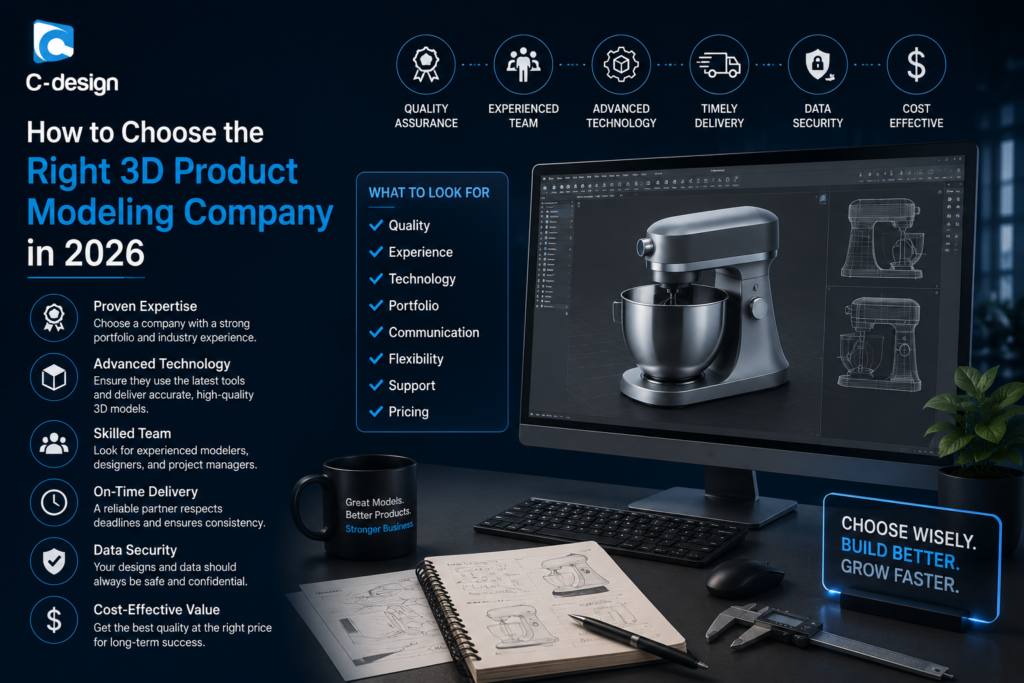
Choosing the Right Outsource 3D Modeling Partner

When selecting a 3D modeling service provider, businesses should evaluate:

  • Portfolio quality
  • Industry expertise
  • Communication process
  • Turnaround time
  • Technical capabilities
  • Scalability
  • Pricing structure
  • Client reviews

C-Design consistently performs strongly across all these areas, making it a reliable long-term outsourcing partner.


Conclusion

The demand for high-quality digital visualization is growing across industries worldwide. Businesses now require immersive, realistic, and scalable visual content to stay competitive in modern markets.

By choosing Outsource 3D Modeling Services, companies gain access to professional expertise, advanced technology, faster production, and cost-effective solutions.

Whether it involves:

outsourcing provides a smarter and more scalable approach to visualization and digital production.

Among the many outsourcing providers available today, C-Design stands out as a trusted global partner due to its:

  • Industry expertise
  • High-quality visual outputs
  • Skilled 3D artists
  • Scalable workflows
  • Competitive pricing
  • Fast delivery
  • AR/VR capabilities

For businesses in the US, UK, Germany, France, Australia, New Zealand, and beyond, C-Design offers the perfect combination of creativity, technology, and reliability.

If your business is looking to elevate product presentation, architectural visualization, furniture rendering, or immersive digital experiences, partnering with C-Design can help you achieve exceptional results while reducing operational costs.


CTA: Connect with Our Expert Team

Looking for professional Outsource 3D Modeling Services for products, furniture, architecture, or AR/VR applications?

C-Design delivers high-quality 3D visualization solutions tailored to your business goals with fast turnaround times and scalable production support.

Connect with our Expert Team today and discover how premium 3D modeling services can transform your business presentations, product marketing, and customer engagement.


Frequently Asked Questions (FAQs)

1. What industries benefit most from outsourcing 3D modeling? Architecture, furniture manufacturing, real estate, e-commerce, and industrial design benefit most due to the high volume of visual assets required for marketing and development.

2. How does C-Design ensure the security of my intellectual property? C-Design follows strict data security protocols and non-disclosure agreements (NDAs) to ensure that all client designs and proprietary information remain confidential.

3. What file formats does C-Design provide? We provide all industry-standard formats including .MAX, .OBJ, .FBX, .STL, .glTF, and .GLB, ensuring compatibility with software like 3ds Max, Blender, and various AR/VR engines.

4. Can you handle large-scale, high-volume projects? Yes. With a team of over 400 professionals, C-Design is built for scalability, allowing us to manage hundreds of models simultaneously without compromising quality.

5. How long does a typical 3D modeling project take? Timelines vary based on complexity. A simple product model may take 24–48 hours, while a complex architectural walkthrough or AR environment may take several weeks.

6. Do you offer revisions if the initial model needs changes? Absolutely. We include a revision process in our workflow to ensure the final output aligns perfectly with your design intent and technical requirements.


Tags

Outsource 3D Modeling Services, 3D Furniture Modeling, 3D Product Design, 3D Rendering Services, Architectural 3D Modeling, 3D Architecture Visualization, Product Modeling Services, Texturing Services, AR VR Modeling, Augmented Reality Virtual Reality, Furniture Rendering, 3d modeling and design ,Product Visualization, Architectural Rendering, 3D Modeling Company, Virtual Reality Modeling, Photorealistic Rendering, Interior Visualization, Exterior Rendering, 3D Design Services