The Impact of 3D Modeling and Digital Twins in Industrial Design and Manufacturing
In today’s fast-moving industrial world, precision is everything. Whether you are designing a new machine component, refining a consumer product, or building a complex manufacturing system, even a small error can create costly delays. That is why 3D modeling and digital twins have become essential tools in modern industrial design and manufacturing. They help engineering teams move faster, test smarter, reduce waste, and deliver products with greater confidence.
For companies that need accuracy without slowing down production, Outsource 3D Modeling offers a practical advantage. By outsourcing CAD and 3D modeling work to skilled professionals, businesses can access high-quality design support, speed up development cycles, and reduce the burden on in-house teams. In a competitive market, that flexibility can make a real difference.
What Are 3D Modeling and Digital Twins?
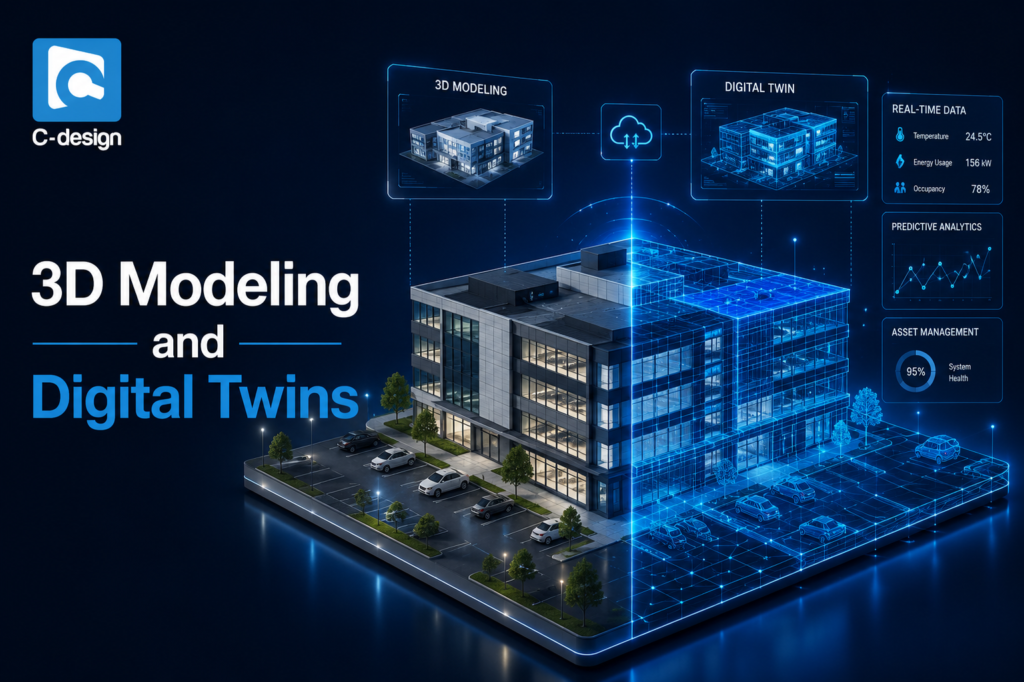
At the most basic level, 3D modeling is the process of creating a digital three-dimensional representation of a part, product, or assembly. In industrial design, these models are often built with parametric CAD tools, which means the model can be edited by changing dimensions, features, or constraints. This makes design iterations faster and more controlled.
A digital twin takes that idea a step further. It is a virtual version of a physical product, process, or machine that can be used for simulation, monitoring, and performance analysis. In manufacturing, digital twins allow teams to see how a product will behave in real-world conditions before it is even built. That means better planning, fewer surprises, and stronger decision-making.
Together, 3D modeling and digital twins give engineers a smarter way to design, test, and improve products before production starts.
Why 3D Modeling Matters in Industrial Design
Industrial design is not just about making a product look good. It is about making sure the product functions properly, can be manufactured efficiently, and meets real-world requirements. This is where precise parametric 3D modeling becomes especially valuable.
A well-built 3D model helps designers:
Visualize the product clearly before prototyping.
Test fit and functionality early.
Make design changes without starting from scratch.
Detect interference or clearance issues before production.
Improve collaboration between design, engineering, and manufacturing teams.
When a model is parameter-driven, the design process becomes more flexible. If a shaft diameter changes, for example, linked components can update accordingly. That saves time and reduces the risk of mismatch errors. For industrial product design, this level of control is not just helpful — it is essential.
How Digital Twins Improve Manufacturing
Digital twins are transforming manufacturing because they allow teams to simulate conditions, analyze performance, and improve processes before physical production begins. Instead of waiting for a problem to happen on the shop floor, manufacturers can identify risks in the digital environment first.
This is especially useful for:
Assembly line planning.
Machine and equipment performance testing.
Process optimization.
Predictive maintenance.
Quality assurance and error prevention.
For example, if a digital twin shows that a component may overheat under certain operating conditions, engineers can make changes before any material is wasted on a flawed prototype. That kind of early insight can save time, money, and resources.
Digital twins also help teams monitor live systems once production begins. By comparing actual performance with the digital model, manufacturers can spot inefficiencies, reduce downtime, and keep operations running smoothly.
Faster Prototyping and Better Product Development
One of the biggest advantages of 3D modeling and digital twins is the ability to accelerate rapid prototyping. In traditional product development, teams often relied on multiple physical prototypes, each one costing time and money. With modern CAD and simulation tools, many issues can now be caught digitally before prototypes are made.
This speeds up the development cycle in several ways:
Design changes can be made quickly in the CAD model.
Virtual testing reduces the number of physical iterations.
Engineers can compare multiple versions side by side.
Prototypes become more accurate because many errors are already resolved.
For industrial product development, that means faster time to market. When teams can move from concept to production with fewer setbacks, they gain a real business advantage.
Reducing Material Waste and Production Costs
Manufacturing waste is not just an environmental concern — it is also a cost concern. Every incorrect cut, failed prototype, or reworked part adds expense. Precise 3D modeling and digital simulation help reduce those losses by catching problems earlier in the workflow.
Here is how they help reduce waste:
Accurate models minimize design errors.
Virtual testing lowers the need for repeated physical prototypes.
Better planning reduces material overuse.
Assembly simulations prevent costly manufacturing mistakes.
Design validation helps avoid scrap and rework.
This is one reason why many companies now rely on Outsource 3D Modeling for CAD support. When experienced professionals handle the modeling process, the resulting designs are often cleaner, more accurate, and easier to manufacture. That translates into less waste, fewer corrections, and better efficiency overall.
Preventing Manufacturing Errors Before They Happen
Manufacturing errors are expensive because they affect timelines, materials, labor, and customer trust. Even a small design flaw can create a chain reaction in production. A hole placed incorrectly, a part that does not align, or a tolerance issue can create major setbacks.
3D modeling and digital twins help prevent these problems by allowing teams to verify designs before fabrication. With the right CAD workflow, engineers can:
Check part interference.
Validate tolerances.
Review assembly compatibility.
Simulate movement and load conditions.
Identify weak points in the design.
This proactive approach reduces the chance of error during production. It also helps teams work with greater confidence because they are not guessing — they are testing and validating.
Why Parametric CAD Is So Important
Parametric CAD is one of the strongest tools in industrial design because it keeps the model intelligent and editable. Rather than redrawing a part every time a dimension changes, engineers can update the driving parameters and let the system adjust automatically.
That matters because industrial projects often evolve quickly. A customer may request a different size. A supplier may change a material. A manufacturing process may require a design adjustment. Parametric modeling makes those changes easier to manage without creating a messy workflow.
It also improves consistency across assemblies. When related components are linked logically, design updates remain aligned. That means fewer mistakes, less manual correction, and better overall quality.
The Role of Outsourcing CAD in Modern Engineering Workflows
Many engineering and product design teams are under pressure to do more with less. Deadlines are tighter, product complexity is higher, and internal teams are often stretched thin. This is where outsourcing CAD becomes a smart business decision.
By working with a trusted partner like Outsource 3D Modeling, companies can extend their design capacity without adding full-time overhead. Outsourcing does not mean giving up control. In fact, it often improves workflow by giving businesses access to specialized CAD talent exactly when they need it.
Here are some of the key advantages:
Access to experienced 3D modeling professionals.
Faster turnaround on design tasks.
Support for peak workloads and urgent projects.
Reduced hiring and training costs.
Better scalability for growing businesses.
For industrial design firms, manufacturers, and engineering companies, outsourcing can help keep projects moving without sacrificing quality.
How Outsource 3D Modeling Adds Value
Outsource 3D Modeling focuses on delivering precise, reliable, and production-ready CAD support for industrial product design and engineering applications. The company’s strength lies in combining technical expertise with a practical understanding of manufacturing needs.
That means clients can benefit from:
Accurate parametric 3D models.
Clean designs that are easier to review and manufacture.
Efficient support for concept development and prototyping.
CAD work aligned with real production requirements.
A dependable outsourcing process that saves time.
This is especially useful for businesses that need to move from idea to prototype quickly. Instead of waiting for internal bandwidth to open up, teams can outsource modeling tasks and keep development on schedule. That improves productivity and helps teams stay focused on core engineering decisions.
Better Collaboration Across Teams
Another important benefit of 3D modeling and digital twins is improved collaboration. In industrial projects, design, engineering, operations, and manufacturing teams all need to work from the same information. A clear digital model makes that easier.
With a shared 3D environment, teams can:
Review product geometry visually.
Identify issues early in the process.
Communicate changes more clearly.
Align design intent with manufacturing realities.
Reduce misunderstandings between departments.
This kind of collaboration is especially valuable when multiple stakeholders are involved. Instead of relying on unclear sketches or static drawings alone, teams can discuss a model that everyone can understand.
Real-World Impact on Industrial Product Design
In industrial product design, the impact of 3D modeling and digital twins is practical and measurable. Products can be designed more accurately, tested more thoroughly, and manufactured more efficiently. That leads to better performance and fewer costly mistakes.
For example, a company designing a custom machine enclosure can use 3D modeling to check internal clearances, access points, and mounting features before fabrication. A digital twin can then simulate airflow, heat buildup, or mechanical stress. If a problem appears, the design can be adjusted digitally instead of after a failed prototype.
That kind of workflow saves time and resources while improving the final product. It also gives businesses more confidence when moving into production.
Why This Matters for the Future
Industrial design and manufacturing are becoming more data-driven, more connected, and more competitive. Companies that adopt 3D modeling and digital twin workflows are better positioned to respond to change quickly and efficiently.
In the future, the importance of these tools will only grow. As products become more complex and customers demand faster delivery, businesses will need smarter design and simulation methods to stay competitive. Those that invest in digital workflows now will be better prepared for the next wave of industrial innovation.
For many organizations, the smartest path forward is a blend of in-house expertise and outsourced support. That is where Outsource 3D Modeling can play a valuable role by helping companies scale design work without sacrificing precision.
SEO Keywords
3D modeling services, digital twins in manufacturing, industrial product design, parametric CAD modeling, rapid prototyping, outsourcing CAD, product design outsourcing, manufacturing simulation, engineering design support, reduce material waste, prevent manufacturing errors.
FAQs
- What is the main benefit of 3D modeling in industrial design?
The main benefit is accuracy. 3D modeling helps engineers visualize, test, and refine products before manufacturing, which reduces design errors and improves efficiency. - How do digital twins help manufacturers?
Digital twins let manufacturers simulate, monitor, and optimize products or processes in a virtual environment. This helps improve performance and catch issues before they become real-world problems. - Why is parametric CAD useful?
Parametric CAD makes design changes easier and faster. When dimensions or features need to be updated, the model can adjust automatically instead of being redrawn from scratch. - How does 3D modeling reduce material waste?
It reduces waste by catching design flaws early, minimizing prototype failures, and improving manufacturing accuracy before physical production begins. - What are the advantages of outsourcing CAD work?
Outsourcing CAD provides access to skilled designers, speeds up project turnaround, lowers overhead costs, and helps companies handle workload spikes more easily. - How does Outsource 3D Modeling support industrial product design?
Outsource 3D Modeling provides precise, production-ready CAD and 3D modeling services that help businesses develop better products, faster, and with fewer errors. - Is outsourcing CAD suitable for engineering companies?
Yes. It is especially useful for engineering companies that need flexible design support, faster delivery, and high-quality modeling without expanding internal teams.
Call to Action
If you are looking to improve product development, reduce waste, and speed up manufacturing, now is the time to explore smarter design workflows. Outsource 3D Modeling helps engineering and industrial product design teams with accurate CAD services, parametric modeling, and design support that make a real difference.
Whether you need help with rapid prototyping, manufacturing simulation, or outsourced CAD support, our team is ready to help you move from concept to production with more confidence.
Visit www.outsource3dmodeling.com to learn more about how we can support your next project.
Tags
3D Modeling, Digital Twins, Industrial Design, Manufacturing, Parametric CAD, Rapid Prototyping, Outsourcing CAD, Product Design, Engineering Design, Manufacturing Simulation, Reduce Material Waste, Prevent Manufacturing Errors, Outsource 3D Modeling

No comments:
Post a Comment